Concrete Curing Options

concrete curing option1. Water Cure

  • Flooded
  • Ponded
  • Mist Sprayed

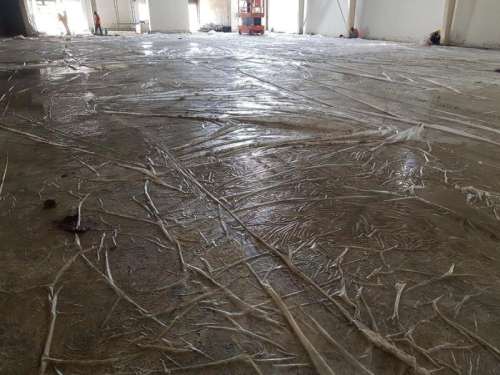
Water curing is the most effective method for curing concrete. Not the best option for Decorative Concrete work as thismethod is prone to efflorescence causing discoloration. Works well for standard gray concrete, or concrete that will be usedfor polished surfaces.

2. Water Retention Methods

  • Sand
  • Canvas
  • Burlap
  • Straw

Keeping the above stated options continuously wet or damp during the curing period will allow concrete to fully hydrate. Not the best option for Decorative Concrete work as this method is prone toefflorescence causing discoloration. Works well for standard grayconcrete, or concrete that will be used for polished surfaces.

  4 Hits

Concrete Joint types

Concrete Joint types

  • Freshly placed concrete is always prone to cracking off inside corners.
  • Spacing Recommendations no more that 2-3 times the size in inches
  • 4 inch thick slab need joints that are 8-12 feet on center
  • 2” slab = 4 to 6 foot joints
  • 5 cm slab = 2 meter squared joints
  • 4” slab = 8 to 12 foot joints
  • 10 cm, slab = 3.5 meter squared joints
  • 6” slab = 12 to 18 foot joints
  • 15 cm slab = 5 meters squared joints

What is the difference between a construction joint, isolation joint and control joints?

CONSTRUCTION JOINT

Joints in concrete pavement are created by forms to end one concrete pour and start another. If a pour is too large to cast at one time, workers set forms to complete the pour and then remove them to join the next placement to the old one. The cleanest way I have ever seen a construction joint placed is by using a small edger (the smallest you can find) on the first pour. This edger will be used to create a slightly rounded edge on the exterior formwork of the slab. From there your next pour will be finished to the existing height of the first pour and not edged. The next morning come back and use a framing chalk line to mark a straight line on the construction joint and saw cut the joint open. This will look like the two slabs were poured at the same time and saw cut later.

  4 Hits

Preventing Concrete Cracks

Preventing Concrete Cracks “WHY CONCRETE CRACK”

Poorly compacted or prepared sub-grade:

Excavations beneath the slabthat are not to be filled with concrete (usually plumbing or other mechanical trenches) should be brought back to grade in compacted lifts. This means a 24" (60 cm) trench would be back filled 6" (15 cm) at a time, each "lift" being mechanically vibrated so it is left compact. If these excavations are not compacted when backfilled, this loose soil will settle over time leaving the concrete over that area with no earth under it. This becomes a prime place for concrete to settle and crack.

Excess water in the mix:

Concrete requires very little water to hydrate properly.Typically concrete flat work is poured with toomuch water. For every pound (or kilogram or any unit of weight of cement, about 0.25 pounds (or 0.25 kg or corresponding unit) of water is needed to fully complete the hydration reactions. This requires a water-cement ratio of 1:4often given as a proportion: 0.25. However, a mix with a w/cratio of 0.25 may not mix thoroughly, and may not flow wellenough to be placed, so more water is used than is technically necessary to react with the cement. More typical water-cement ratios of 0.4 to 0.6 are used.

  4 Hits

Superflat flooring in India

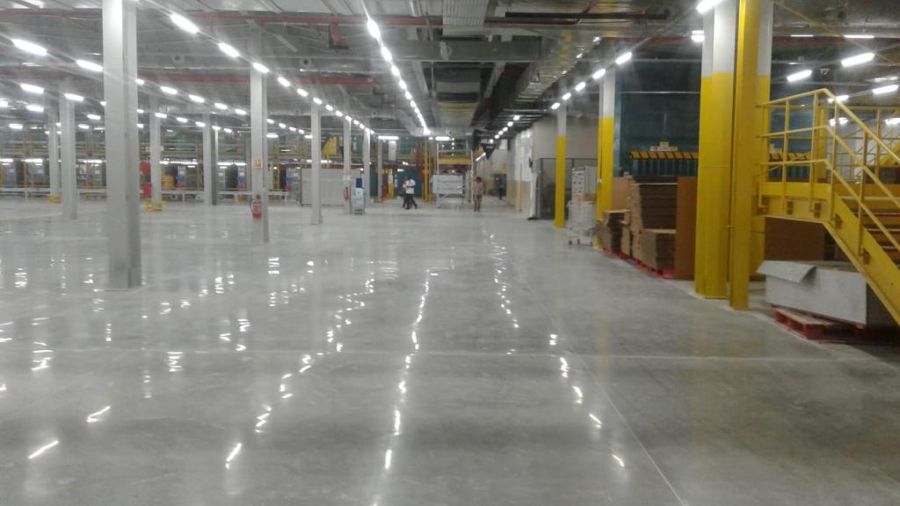
Now Introducing superflat Concrete floors in India which will facilitate smooth and quick VNA (very narrow isle) movement within your warehouses and factories.


  4 Hits

Concrete Polishing Benefits

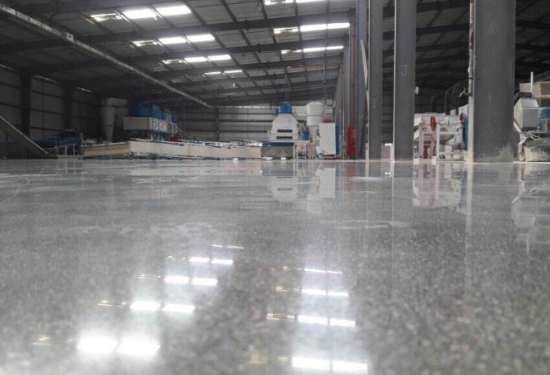
From ordinary concrete floors, you can make a very interesting, inexpensive and durable flooring that holds permanently by concrete polishing. Even when renovating the floor, sanding and polishing can be a way of repairing a concrete floor in need of renovation.

Polish Concrete Floor

Concrete Polishing BenefitsIn commercial buildings, exposed concrete is often planned from the outset as a very durable and durable floor covering. Another floor covering is not necessary.During production, care is also taken to ensure that the surface is a bit smoother.

An ordinary concrete floor can also be used as a floor covering, if you grind it first, and then polished to shine. Of fair-faced concrete then distinguishes him only the "ordinary" optics.

Ground concrete floor as a stylistic device

When it comes to obtaining the most discreet and deliberately sober-looking floor covering, a sanded concrete floor is very suitable. In the interior, this can also be a ground screed.The floor is then very resistant to abrasion, has an interesting, but very subtle look due to the not quite uniform surface, and does not require baseboards.

  3 Hits

Concrete Flooring : The most versatile flooring option in India

Concrete flooring is a massive growing trend and its roots are spreading in the flooring market in warehouse, retail, and decorative facilities across India & the globe.Concrete flooring has transformed more than any other concrete trade in the last decade. From conquering the industrial flooring type into the architectural and retail world.

It’s myriad features such as durability, strength, value for money, sustainability make it the new acceptable standard in commercial and industrial flooring

Concrete flooring has graced the space in high-visibility and high-traffic commercial spaces, such as retail stores, restaurants and salons. The better substitute for wood, vinyl tile, and carpet.

Concrete’s ability to take pressure and wear and tear is much more than most flooring materials. Add to it, versatility that allows it to be customized to suit any spectrum, is what sets it apart.

Concrete Floors are best suited for high-traffic retail facilities because of their durability and design versatility. Concrete flooring stands for durability, abrasion resistance and low maintenance.

Continue reading
  3 Hits

Crazing

Crazing, a network pattern of fine cracks that do not penetrate much below the surface, is caused by minor surface shrinkage.

Crazing cracks are very fine and barely visible except when the concrete is drying after the surface has been wet. The cracks encompass small concrete areas less than 50 mm (2 in.) in dimension, forming a chicken-wire pattern. The term “map cracking” is often used to refer to cracks that are similar to crazing cracks only more visible and surrounding larger areas of concrete. Although crazing cracks may be unsightly and can collect dirt, crazing is not structurally serious and does not ordinarily indicate the start of future deterioration.

When concrete is just beginning to gain strength, the climatic conditions, particularly the relative humidity during the drying period in a wetting and drying cycle, are an important cause of crazing. Low humidity, high air temperature, hot sun, or drying wind, either separately or in any combination, can cause rapid surface drying that encourages crazing. A surface into which dry cement has been cast to hasten drying and finishing will be more subject to crazing. The conditions that contribute to dusting, as described below, also will increase the tendency to craze.

To prevent crazing, curing procedures should begin early, within minutes after final finishing when weather conditions warrant. When the temperature is high and the sun is out, some method of curing with water should be used, since this will stop rapid drying and lower the surface temperature. The concrete should be protected against rapid changes in temperature and moisture wherever feasible.


  4 Hits

Delamination in Concrete Floors

unnamedHearing a hollow sound in your concrete floor? Or while tapping your floor, you discover more such empty, loud rings?Well, your concrete floor could be facing the common yet serious problem of delamination. A problem that’s audible even before it becomes visible.
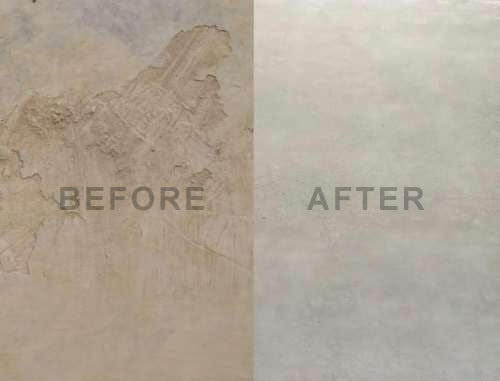
Delamination is the detachment of a surface layer (top wear layer) due to the various technical reasons, including but not limited the ill-timing of hardener broadcasting, mix design issues or final trowel finishing process, which must only be started at an appropriate stage while the concrete is still green.

It is troweling that compresses and lessens the penetration of the surface layer of the concrete floor. If it’s done ahead of time, bleed water or air can be trapped below the cemented surface layer forming blisters that delaminate the surface.From our pouring experience of over a decade, we suggest to tackle such problem with a few noteworthy points that helped us overcome this situation and counter it successfully:

  3 Hits

Super Flat Flooring System Technology

ideal hard 112Superflat floors are high-precision coatings, with a deviation of flatness deviation of not more than 2mm by 2 meters. Such high accuracy is necessary for the movement of complex technical mechanisms: stackers, mast loading machines for high-altitude storage of products. Also, superplane coatings are used in most automated lines for the production of high-precision products. Superflat floor coverings are made of self-lubricating polymer compounds. The main application of such coatings is rack storage. BGSB has decades of experience in laying super flat flooring using state of the art technology.
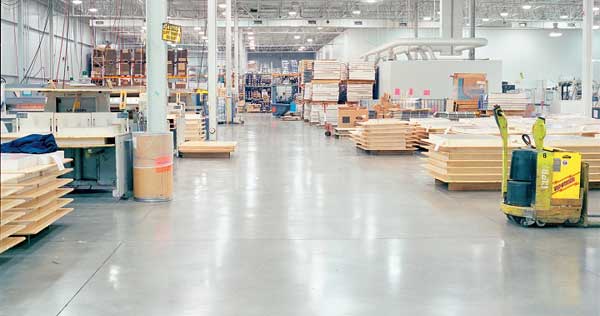
Modern trends in construction in large metropolitan areas show a constant and steady "growth" of all construction structures up. This is due to the increase in land prices, and with the understandable desire of developers to reconstruct on the same plot of land as much usable space as possible. Naturally, the height of not only residential and office buildings is increasing, but to no lesser extent, these tendencies are subject to warehouse facilities and modern logistics complexes.

  3 Hits

Polished Concrete FAQ

polished concreteThe Polished Concrete Floors are frequently deployed in remodeling high - traffic areas such as shopping Malls, health centers, airports, and Factories. But they are also increasingly being used as floors for home interiors.
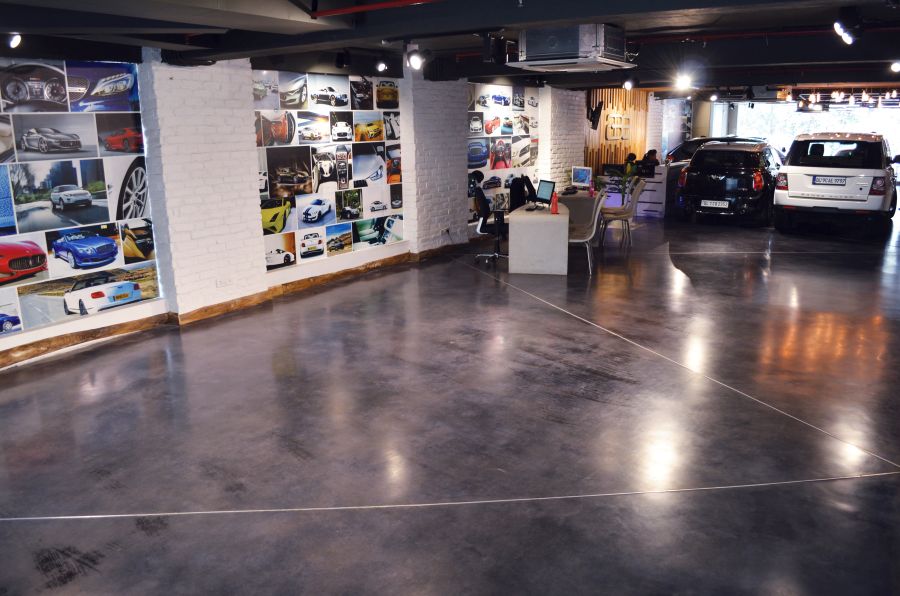
If your factory, company or residence has traditional concrete flooring which over the time looks dull, then polishing is the ideal solution to restore its charm sustainably rather than rebuilding or adopting floor coverings.

What is Polished Concrete?

Concrete is a natural composite material and is made from an aggregate (typically granite flakes, rocks, and boulders ) combined with a cement binder (such as calcium sulfate and limestone) and water. If you are now wondering what's the difference between concrete and cement is: cement is a component of concrete.

In order to make the concrete surface smooth and attractive, it must first be treated with a concrete compressor chemical that is applied to the concrete surface to fill the pores. As soon as the smooth concrete surface is obtained and dried, it is sanded with abrasive tools - first rough, then finer - polished, in order to achieve the desired finish.

  3 Hits

Concrete Polishing With Hands - DIY

color polished concretePolishing concrete by hands is something that can be done with hands using the appropriate tools and techniques. Here are steps to follow for polishing concrete with hands.
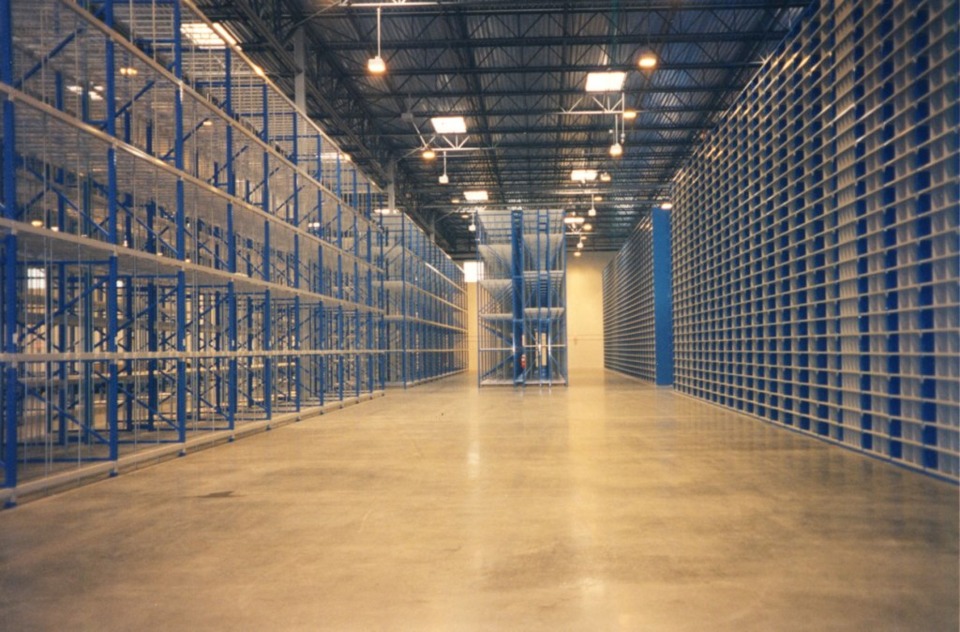
  1. The primary stage of preparation of the old floor involves cleaning the surface from old tiles, varnishes, paints and other contaminants by milling or by shot blasting.

  2. The next step eliminates potholes, cracks and deformation shrinkage seams. In order to level the surface, use epoxy mastic. It is required to create a surface of such smoothness that the working elements of the grinding machine (heads) do not cling to surface irregularities.

  3. Using diamond disks having a grain size of up to 37 microns (400 grit), the preliminary grinding is performed "coarse". If the surface is smooth, that is, milling and leveling the surface is not required, this operation is performed immediately. The floor of concrete is cleaned of dust and dirt.
    polishing concrete 
  4. With the help of a special hardener, the surface is made of concrete. The components of the reinforcing agent begin to interact with calcium hydroxide, which is contained in the concrete. This makes it possible to strengthen the strength characteristics of concrete. After grinding, the floor surface is treated with an impregnator, for example, Densifier.

  5. At the last stage, grinding is carried out with discs having a grain size of more than 400 grit and final polishing of the concrete surface with diamond discs having a grain size of 10-5 μm (1500-3000 grit).
  4 Hits

Steps For Polishing Concrete Floors

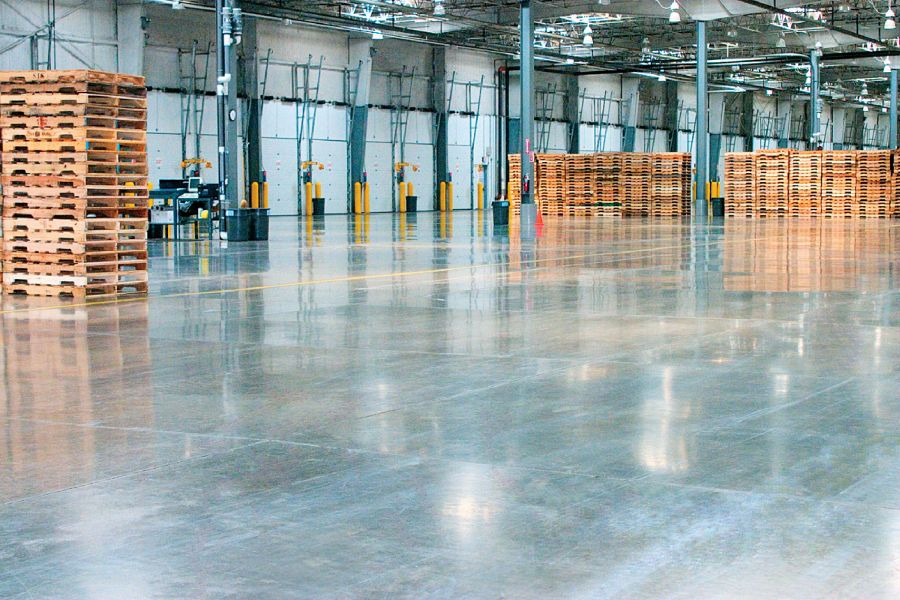
Toyota01.58d17dfd49a0cConcrete is used in many ways. You can process your floor yourself with a concrete polishing machine in the dry polishing process and bring to a high gloss.It is important to note that if you have no experience in milling or slotting, you should have the work done by a professional craftsman to prevent injury.Let us know the steps of polishing a concrete floor:
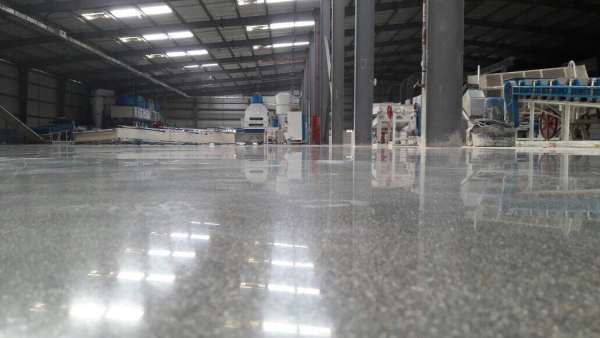
  1. The prerequisite for a good result is extensive cleaning of the concrete surface. Remains of paint, adhesive residue or the like scratch or sand off entirely before polishing.
  2. Never use water during the entire polishing process, for example, to clean the floor in between. This can cause damage to the concrete.
  3. Then do a pre-sanding. Use a suitable milling cutter for your polishing machine.
  4. If you do not have your own polishing machine, you can borrow a corresponding device from a specialist retailer.
  5. After this sanding, sweep the concrete surface carefully with a broom.
  6. Now treat the surface with a diamond polishing wheel with a coarse grain size of about 200 to 400. Diamond segments for polishing machines are also available from specialist dealers.
  7. Now you have to clean the machined surface again with a broom.
  8. Now follows a diamond polishing wheel with a finer grain size. It is important that you do not immediately polish with the finer grain size. The grain should double with each work step, that is to say, finer.
  9. Clean the surface again with a broom.
  10. Decide now whether you are already satisfied with the result, or whether you want to polish again.
  11. If the result is your wish, use a vacuum cleaner to absorb the fine dust.
  7 Hits

Warehouse Floor Solutions Using Concrete floors

Jointless Concrete Floors

Choosing a concrete flooring solution for a warehouse - Professional Approaches

If you require concrete flooring in warehouses and hangars, then you need a clear understanding of the purpose of the floor for storage/ warehouse space. What should it be? Flat floor in the warehouse, this is the most important condition. In overwhelming cases, the floor surface in the warehouses is made of concrete, and if required, with a hardened top layer.

Such a floor is suitable for operation in non-food storage and factory stores.The operating conditions of the warehouse floors are standard, both in heated warehouses and in cold hangars. However, warehouse concrete floors with topping should not be used if there is a possibility of chemical reagents and substances falling onto the floors, as well as prolonged contamination with oil products.super flat floors.Warehouse concrete floor can be either with the usual tolerances for the differences in the flatness of the surface of the storage floor.

  2 Hits

What Is industrial flooring

polished concrete3To the question - what is the industrial flooring ? - the first thing is an industrial structure - a large object, implying its production features. But this does not mean that the industrial floor is used exclusively at industrial construction sites. In the term "industrial", the importance is not so much that the floor is located on an industrial site - in a shop, in a warehouse, etc., but that the floor is operated in a "hard" - "industrial" way.

Capital construction can be carried out in the form of new construction, expansion, technical re-equipment, reconstruction or modernization of the enterprise includes all branches of construction and is divided into industrial, civil, transport, military construction, etc. Modern industrial floors are used in construction in all departments of capital construction and reconstruction of premises.

Industrial flooring is significantly different from the construction of other types. When implementing these facilities, modern technologies are used, operational loads are taken into account, floors must satisfy all the requirements of technological processes, ensure a long service life, reliable operation.

  3 Hits

Contact Us

reCAPTCHA *

BGSB India

BGSB Concrete Solutions Pvt Ltd

Email- info@bgsb.in

Helpline Number

India- +91-9599991020

BGSB Africa

BGSB Concrete Africa Ltd

Email Address :info@bgsbafrica.com

Helpline Number 

Kenya     - +254-788994025

Uganda   - +256-707176737

Tanzania - +255 69 852 7049

BGSB UAE

BGSB Unique Technical Services LLC

Office No : A32, Bin Dasmal Building - 2,
Al Quoz Industrial Area First, Dubai, UAE

Helpline Number 

UAE - +971-502041332